
 English
 Russian
 French
 Spanish
 Portuguese
 Arabic
 Korean
 Vietnamese
 Turkish
-
ABOUT US >
Company Profile Factory Display Equipment Display Privacy Statement Terms&Conditions
-
NEWS >
FOLLOW US
Contact us and you will find out more about us.



An ERW tube mill is a complex production line that integrates mechanical engineering, precision machining, roll tooling, electrical systems, and high-frequency welding technology. Every stage of manufacturing plays an important role in the machine's performance, production efficiency, and long-term reliability.
At KINGTECH, the manufacturing process starts with understanding customer requirements and continues through engineering design, component manufacturing, machine assembly, system integration, and factory testing.
So, how is an ERW tube mill manufactured? Let's take a closer look at the key stages behind the production of an industrial tube mill.
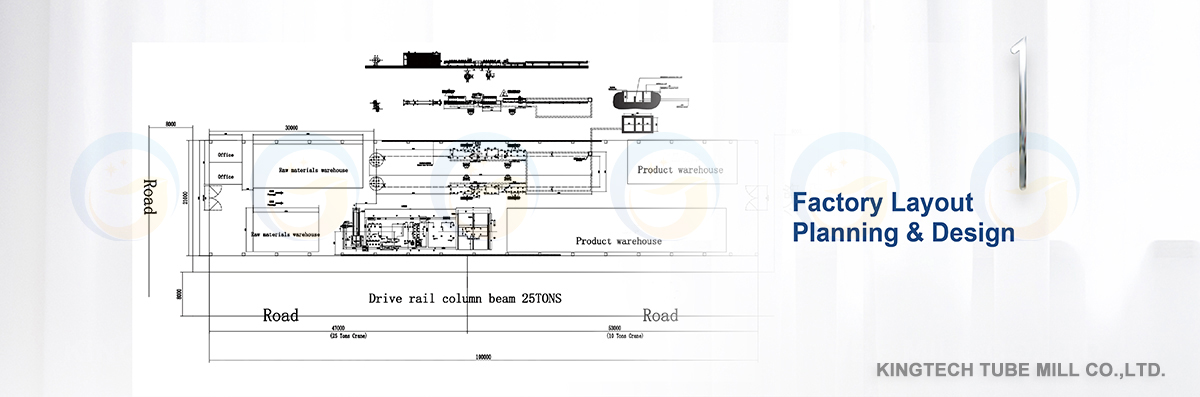
Every ERW tube mill project starts with technical planning and engineering design.
Before manufacturing begins, the engineering team evaluates the customer's production requirements, including:
①Pipe diameter and wall thickness range
②Round, square, and rectangular tube specifications
③Raw material types, such as carbon steel and galvanized steel
④Required production speed
⑤ Intended pipe applications
⑥ Factory layout and available installation space
Based on these requirements, engineers select a suitable machine configuration and prepare mechanical drawings, equipment layouts, and technical specifications.
A well-planned design helps ensure that the production line meets the customer's requirements and provides a solid foundation for the following manufacturing stages.
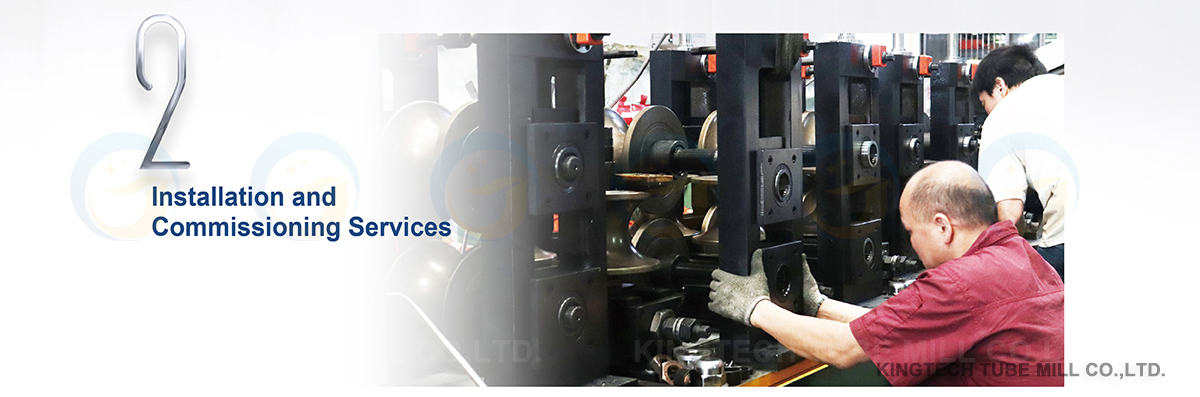
After the engineering drawings are confirmed, the manufacturing process moves into component production.
Different mechanical components are manufactured according to their individual dimensions, structural requirements, and machining tolerances.
Typical manufacturing operations include CNC machining, turning, milling, drilling, and other precision machining processes.
These components form the mechanical foundation of the tube mill. Their machining accuracy and dimensional consistency directly affect machine assembly, alignment, and operational stability.
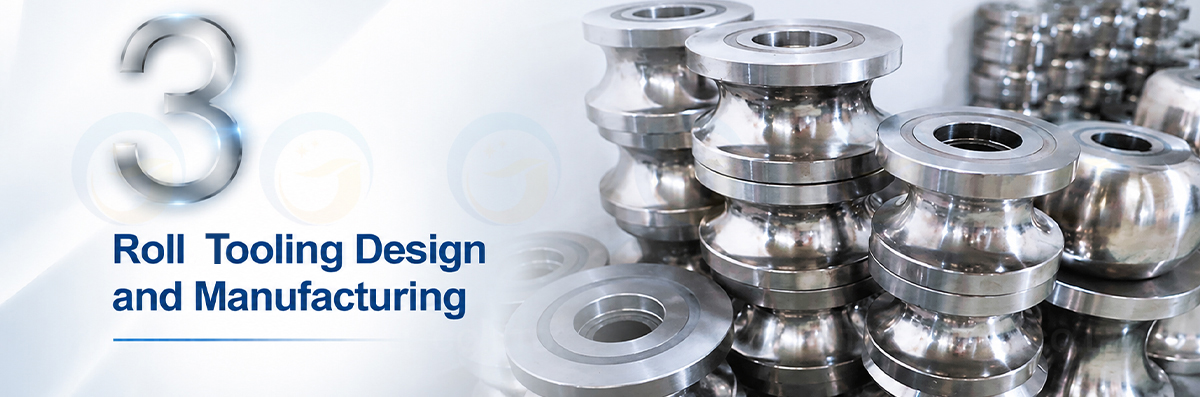
Roll tooling is one of the key elements of an ERW tube mill.
The forming and sizing rolls are designed according to the required pipe dimensions, shapes, and material specifications. They guide the steel strip through successive forming stages until it reaches the required tube shape.
The manufacturing process includes roll design, material preparation, machining, and dimensional inspection.
Proper roll tooling design and manufacturing help achieve consistent tube dimensions, smooth forming operations, and reliable production performance.
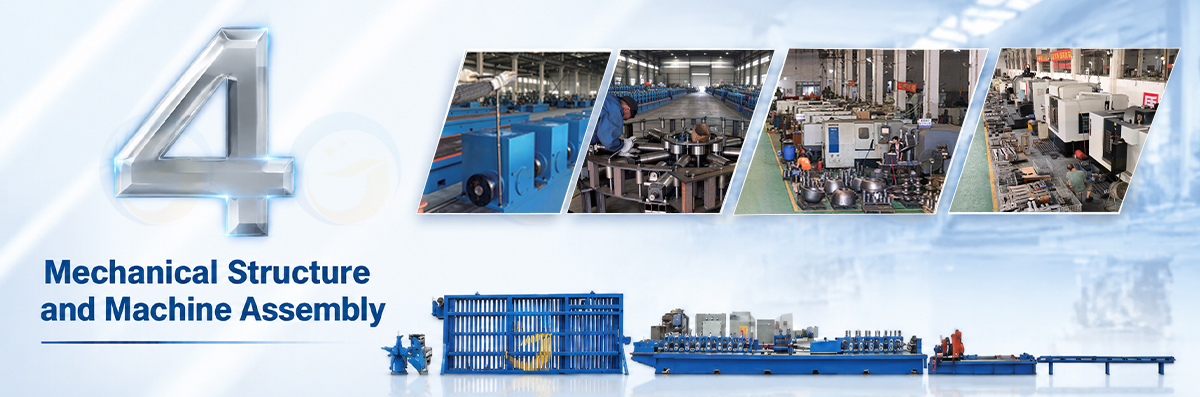
Once the main components and roll tooling are ready, the machine assembly process begins.
Individual machine sections are assembled and integrated into a complete production line. Depending on the machine configuration, the main sections may include:
- Coil loading and strip feeding - Strip cutting and butt welding - Strip accumulator - Forming section - High-frequency welding section - External weld bead removal - Sizing and straightening section - Flying saw cutting system - Automatic run-out table
Each section has a specific function in the tube manufacturing process.
During assembly, engineers and technicians check component positioning, mechanical connections, alignment, and the installation of major machine units.
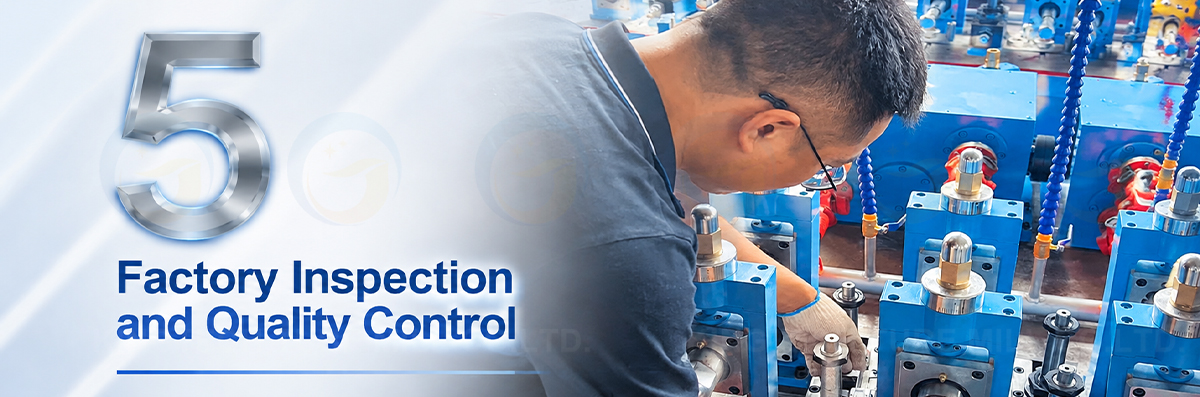
Before delivery, each ERW tube mill undergoes a final factory inspection to check its manufacturing quality, assembly condition, and main system configurations.
As tube mills are usually customized production lines, factory inspection focuses on verifying the equipment against the approved technical drawings and agreed specifications.
The inspection process may include:
Checking the machine structure, component installation, mechanical connections, and assembly accuracy.
Checking roll dimensions, surface condition, and tooling configurations according to the required pipe specifications.
Inspecting electrical cabinets, wiring connections, control components, and system configurations.
Checking the machine sections, accessories, and supplied components against the agreed equipment list.
Checking the overall equipment condition, surface treatment, painting, and other finishing details.
These inspections help ensure that the machine is properly manufactured, assembled, and prepared for shipment.
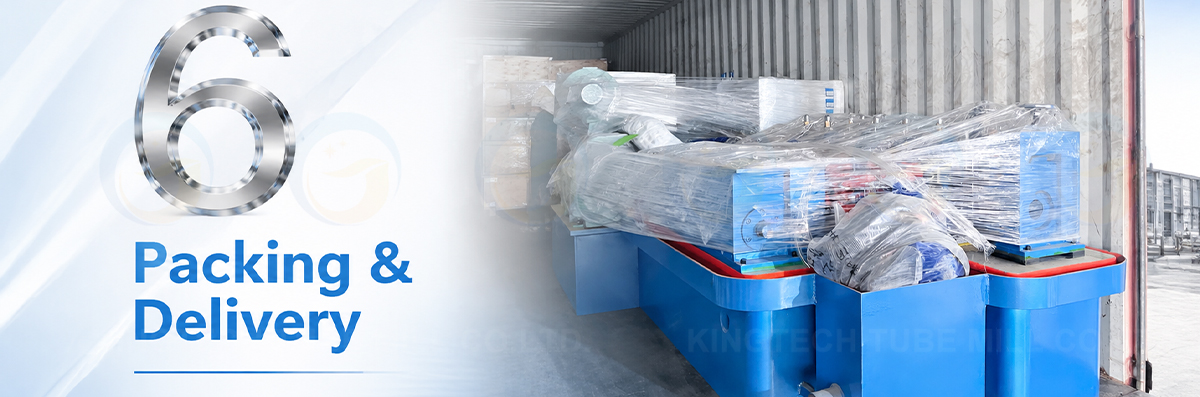
After the factory inspection is completed, the equipment enters the final preparation stage.
The manufacturing team carries out final checks, cleans the equipment, applies necessary rust protection, and prepares individual machine sections and accessories for transportation.
For overseas projects, equipment components are properly identified, protected, and packed according to transportation requirements.
Careful packing and loading arrangements help protect the machinery during long-distance transportation and make subsequent unloading and installation more convenient.
Once the equipment is ready, it can be shipped to the customer's factory for on-site installation, commissioning, and production preparation.
Manufacturing an ERW tube mill involves much more than assembling individual machine components. It requires engineering experience, precision machining, professional roll tooling, mechanical assembly, electrical integration, and systematic quality inspection.
At KINGTECH TUBE MILL CO., LTD., we focus on integrated manufacturing, roll tooling, and technical training to provide customized tube mill solutions for different pipe production requirements.
From initial engineering design to final factory inspection and delivery preparation, every stage contributes to building a production line that meets the customer's agreed specifications.
Contact KINGTECH to discuss your pipe specifications and customized tube mill requirements.

Company Profile Factory Display Equipment Display Privacy Statement Terms&Conditions
Contact us and you will find out more about us.